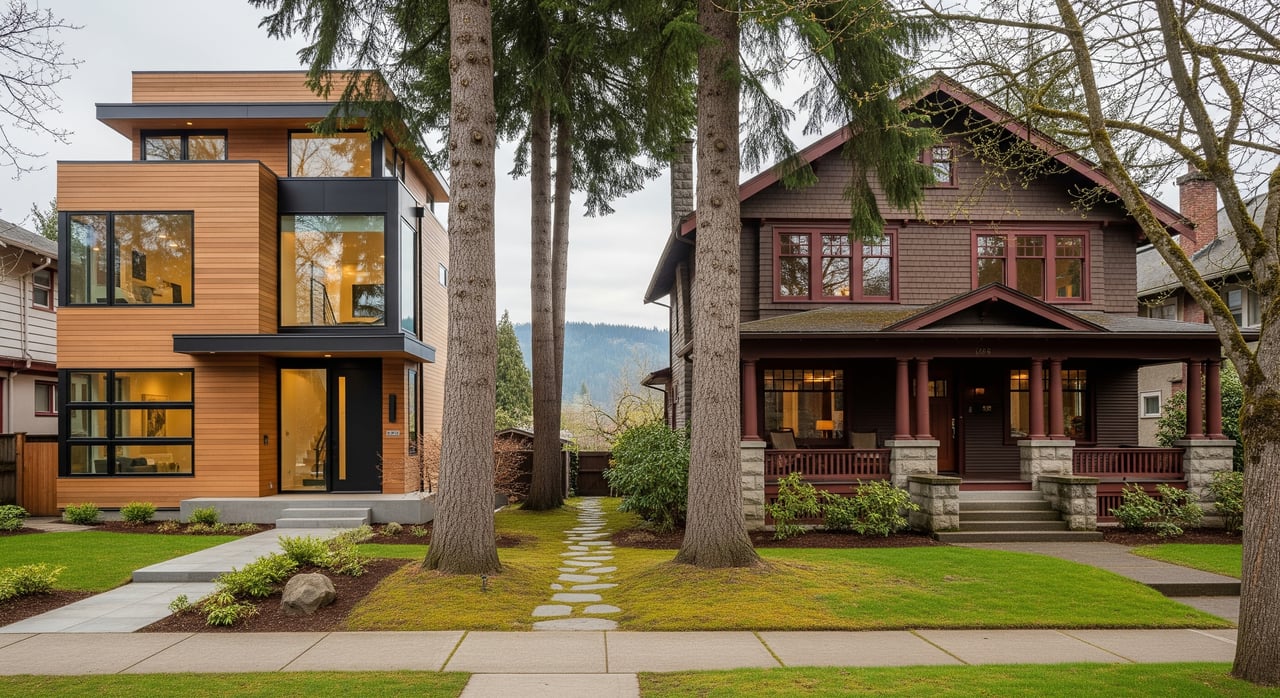
Trying to decide between a brand-new build or a move-in-ready resale in Vancouver, WA? You are not alone. Your choice affects cost, timing, location, and even how you negotiate. In this guide, you will learn what to expect from each path, from price and warranties to commute and resale potential in Clark County. Let’s dive in.
New construction in Vancouver: what to expect
New homes around Vancouver often rise in planned communities on the city’s edges and growth corridors. You will see active building in parts of Salmon Creek, Felida, Orchards, Hazel Dell, and east Vancouver, with more infill townhomes and condos closer to downtown and transit. Development patterns reflect Washington’s Growth Management Act, which focuses building into designated areas.
What you might like:
- Modern layouts, new systems, and energy-efficient features.
- Lower short-term maintenance and repair costs.
- Builder incentives, such as closing cost help or rate buydowns.
What to watch:
- Often a higher price per square foot than nearby resales.
- Added costs for lot premiums, upgrades, and change orders.
- Longer commutes if the subdivision sits farther from central Vancouver or Portland employment centers.
Resale homes in Vancouver: what to expect
Resale homes cluster in established neighborhoods like Downtown Vancouver, East Vancouver, Minnehaha, and Fisher’s Landing. You will typically gain immediate neighborhood character, mature landscaping, and quick access to services.
What you might like:
- Often a lower purchase price than comparable new builds nearby.
- Established streetscapes, parks, and retail corridors.
- Faster move-in timeline and more flexible negotiation options.
What to watch:
- Potential near-term expenses for roof, windows, HVAC, or electrical upgrades.
- Older sewer lines in some areas may warrant a sewer scope inspection.
- Energy efficiency can vary based on age and prior upgrades.
Cost and financing: compare the total
Price and value go beyond the sticker price. Look at the full cost of ownership and how you will finance.
Key differences to budget:
- Purchase price. New construction often lists higher per square foot due to current material costs, lot premiums, and model upgrades. Resales can offer savings but may need updates.
- Soft costs. Builders may charge for lot selection, landscaping, or upgrade packages. Change orders add cost and time.
- Ongoing costs. New systems can mean fewer early repairs. Older homes may need capital improvements sooner.
- Property taxes. In Clark County, tax estimates should reflect the completed home’s assessed value, not the lot alone. Confirm timing and appeals rules with the Assessor’s office.
- Incentives. Builders may offer closing cost credits, upgrade allowances, or mortgage rate buydowns. A rate buydown lowers your interest rate for a set period or for the life of the loan, depending on terms.
- Appraisals. Appraisers lean on nearby comparable sales. In areas with limited new-build comps, valuations can be conservative, which may affect loan-to-value.
- Insurance and utilities. New construction can qualify for lower initial insurance premiums and better energy performance. Ask for energy documentation when available.
If you are financing, compare traditional loans for resales with construction-to-permanent options for homes still being built. For condos, check FHA or VA approval status if you plan to use those loan types.
Timeline and process: how long it takes
Timelines can be the deciding factor for many buyers.
- Resale homes: Typical contract-to-close is about 30 to 45 days, depending on inspection, lending, and title. Move-in timing can be negotiated with the seller.
- New construction (production/spec): If a plan and lot are ready, many builds complete in roughly 3 to 6 months. Spec homes already underway may close sooner.
- New construction (custom): Expect 9 to 18 months or more, depending on design complexity, labor, materials, permits, and weather.
Delays can happen due to inspections, supply chains, or weather. If your timing is tight, a spec home or resale usually offers more certainty.
Inspections and quality control
- New builds include municipal inspections for each phase. You should still hire an independent inspector for a pre-drywall check and a final walkthrough.
- Resales typically include a general home inspection during your contingency period. Older homes may call for roof, sewer scope, pest, or other specialty inspections.
Warranties in Washington
New homes often include a 1-year workmanship warranty, a 2-year systems warranty, and a longer structural warranty that may be backed by a third party. Confirm who backs the warranty and how to file claims. For resales, your protection comes from seller disclosures, any remaining manufacturer warranties, and an optional buyer-purchased home warranty.
Location and lifestyle trade-offs
- Commute and access. Resale neighborhoods near central Vancouver often offer shorter trips to jobs and services. Newer subdivisions can sit farther out, which may mean longer drive times, especially across the I-5 bridge.
- Schools. Boundaries vary across Clark County and can shift with growth. Verify current zoning and capacity with the district.
- Parks and amenities. Established areas tend to have mature trees and walkable retail. New communities may plan parks and sidewalks that take time to complete.
- HOA considerations. Many new subdivisions and townhome or condo projects have HOAs with rules and monthly fees. Review budgets, reserves, and CC&Rs closely.
- Resale value. Location is a key driver of future demand. A well-located resale can outperform a newer but more remote home in appreciation over time.
Negotiation strategies: builder vs. seller
Negotiation looks different with a builder than it does with a homeowner.
With builders, base prices may be firm during strong demand. You can often negotiate:
- Upgrade packages for kitchens, flooring, or appliances.
- Closing cost credits or a temporary rate buydown.
- Landscaping, fencing, or extended warranty coverage.
- Flexible timing on closing or a rent-back if you are aligning moves.
With resale sellers, strategies vary by market conditions. You can often negotiate:
- Price adjustments based on inspection findings.
- Seller-paid repairs or repair credits.
- Closing cost help or rate buydown if the seller is motivated.
- Inclusion of appliances or fixtures.
End-of-quarter or model closeout periods can improve leverage with builders. Spec homes that sit on the market longer can also be more flexible.
Decision guide: which path fits your goals
Pick the lane that matches your priorities. Use this quick guide as a starting point.
Choose new construction if:
- You want modern design, new systems, and lower early maintenance.
- You have flexibility on timing and can tolerate possible delays.
- You value energy performance and the chance to customize finishes.
Choose resale if:
- You prefer established neighborhoods and shorter commutes.
- You need to move within 30 to 45 days.
- You want more price flexibility and are open to targeted updates.
Quick checklist before you commit:
- New build: Confirm the builder’s license, warranty provider, full features list, itemized upgrade pricing, HOA documents, inspection schedule, and a realistic timeline.
- Resale: Review seller disclosures and permit history, get the right inspections, check title and HOA reserves if applicable, and compare recent sales to validate price.
Next steps with a local expert
Choosing between a new build and a resale is easier when you have local insight on neighborhoods, builders, incentives, and likely resale value. If you are weighing options across Vancouver, Camas, Ridgefield, or nearby suburbs, we can help you compare total cost, timing, and appreciation potential for each address on your shortlist.
Have questions about a specific community, builder promotion, or inspection plan? Reach out to the concierge-level team at The Curran Group to map your next move with clarity and confidence.
FAQs
How do new construction prices compare to resale in Vancouver, WA?
- New construction often carries a higher price per square foot due to current building costs, lot premiums, and upgrades, while resales can cost less upfront but may need repairs or updates.
What is the typical timeline to close on a Vancouver resale home?
- Most resale purchases close in about 30 to 45 days, depending on inspection, lending, and title work, with move-in timing negotiated with the seller.
How long does it take to build a new home in Clark County?
- Production builds often take about 3 to 6 months once a plan and lot are ready, while custom builds typically run 9 to 18 months or more depending on complexity and conditions.
What inspections should I order for a new build in Vancouver, WA?
- In addition to city inspections, schedule independent pre-drywall and final inspections to catch workmanship or systems issues before closing and warranty deadlines.
How do property taxes work for new construction in Clark County?
- Plan for taxes based on the completed home’s assessed value, not the vacant lot value, and confirm assessment timing and appeals rules with the county Assessor.
What builder incentives are common in Vancouver-area new developments?
- Builders may offer closing cost credits, upgrade allowances, or mortgage rate buydowns, and they might be more flexible on spec homes or during model closeouts.
