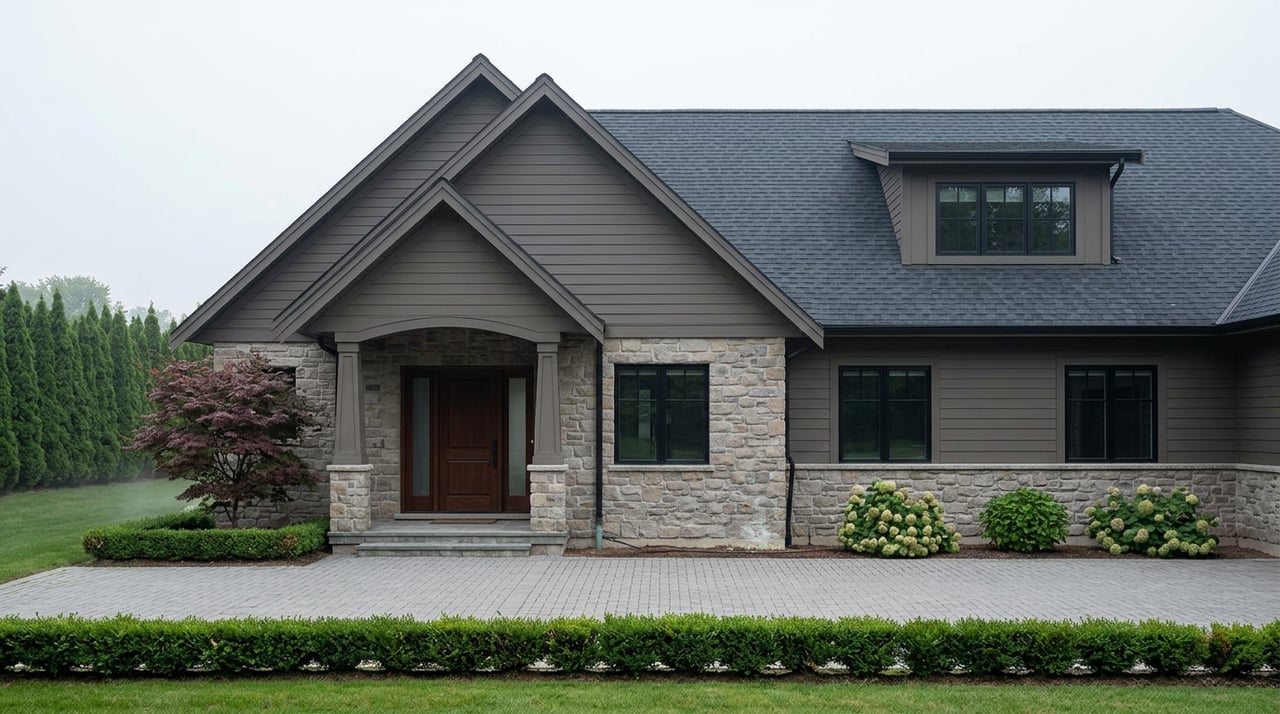
A buyer stood in the driveway of a Prune Hill listing this spring, looking down toward the river, and asked a simple question that turned out to have a complicated answer: is that mill shutting down or is it under construction?
Both, in a sense. Neither, in the way she meant it. The Georgia-Pacific mill that has anchored downtown Camas since 1883 is not closing. It is also not finished being sorted out from decades of industrial use. And it does, on certain wind days, still smell like a working paper mill, because it still is one. For a seller listing a home anywhere between downtown and Prune Hill, these three facts get flattened into a single vague impression: something about the mill, something about disclosure, better mention it and move on. That flattening is the actual problem. Washington's seller disclosure law does not ask what you generally know about the neighborhood. It asks what you actually know about specific, distinct conditions, and the mill currently has three of them running on three separate tracks.
Three tracks, not one mill story
The confusion starts with 2018, when Georgia-Pacific shut down the Camas pulp mill and much of its paper-making operations, a fact plenty of longtime residents still carry as the last update they received. What's happened since is not a continuation of that closure. It's a different set of activities entirely, and each one answers a different question a buyer might ask.
The revitalization project. On November 18, 2025, Georgia-Pacific announced it had started a multiyear project to remove older, unused buildings and upgrade equipment at the mill, according to the company's own announcement and reporting from the Camas Post-Record. The first phase covers roughly 21 structures across a 12-acre section of the working mill site and is expected to run through 2027, with the broader project continuing for several years after that. The company has already put more than $1 million into its No. 11 paper machine and plans to invest another $8 million updating plant equipment, per the project's public information page on Engage Camas. About 150 people still work at the mill, and Georgia-Pacific has said it has no plans to sell or lease any part of the property once construction wraps. Camas community development director Alan Peters told The Columbian in February 2025 that this next phase would be "the most visible from the public's perspective," which is exactly what a buyer touring a nearby home is going to notice: fencing, heavy equipment, a boiler coming down. That visibility is a construction disruption question, not a contamination question.
The cleanup investigation. Running in parallel, and legally distinct from the revitalization work, is a Department of Ecology-supervised investigation into soil, sediment, and groundwater contamination tied to more than a century of industrial use at the site. Ecology and Georgia-Pacific entered an Agreed Order in August 2021 to investigate and evaluate cleanup, and the Downtown Camas Association's public tracking page shows draft Remedial Investigation work plans still moving between the company, Ecology, and the Yakama Nation as recently as 2025. In February 2025, the Camas City Council passed a resolution asking Ecology to require cleanup thorough enough to allow future housing and mixed uses on the site, not just continued heavy industry, a position the council framed as protecting the city's "one of the primary gateways" without disputing the mill's economic role. This is the track that actually touches the word contamination, and it applies to the mill property itself, a fact worth separating clearly from any individual home's disclosure obligations.
The smell. This one has no start date and no project timeline. It comes and goes with wind direction, and it's the version of the mill story that shows up most often in casual conversation rather than any filing. It's a nuisance and character-of-area question, and it's the one buyers are actually asking about when they stand in a driveway and wrinkle their nose.
Here's the table version, because these three tracks get run together constantly and a side-by-side makes the difference concrete:
| Track | What's actually happening | Who's overseeing it | Timeline | Relevant to Form 17? |
|---|---|---|---|---|
| Revitalization project | Demolition of unused buildings, equipment upgrades, ongoing operations | Georgia-Pacific | Phase one through 2027, project continuing for years after | Only as a material fact about visible construction or disruption you have actual knowledge of |
| Contamination cleanup | Soil, sediment, and groundwater investigation under a 2021 Agreed Order | Washington Department of Ecology | Multi-year, draft work plans still in review as of 2025 | Potentially, if you have actual knowledge of a condition affecting the specific property being sold |
| Mill odor | Occasional, wind-dependent industrial smell from ongoing operations | No single authority, it's a byproduct of an active mill | Ongoing, no end date | A nuisance and lifestyle fact worth discussing honestly, separate from the Environmental section |
Where Form 17 actually draws the line
Washington requires most residential sellers to complete a Seller Disclosure Statement, commonly called Form 17, under RCW 64.06. The statute is specific about the standard: sellers disclose based on their own actual knowledge at the time they sign, not on what an inspector might later find and not on general area reputation. That's a meaningful distinction for a Camas seller. Knowing that Georgia-Pacific is investigating groundwater contamination on its own 159-acre site is not the same as having actual knowledge that contamination affects a property you're selling up on Grand Ridge.
The part of the form that matters most here is the Environmental section, and it comes with a rule most sellers never encounter until it's relevant to them. Everywhere else in the disclosure process, a buyer can agree in writing to skip a section of the form. The Environmental section is the one exception written into the statute itself: once a seller answers yes to a question there, that section cannot be waived. That single carve-out exists because environmental conditions are the category the legislature decided buyers need to see no matter what else the contract says.
Once delivered, the buyer has three business days to review the disclosure and rescind the agreement if something in it changes their calculus. If a seller later learns new information that makes an earlier answer inaccurate, before closing, the law requires amending the statement and restarting that three-day window, unless the seller fixes the underlying issue first. None of this is a reason to over-disclose out of caution or under-disclose out of habit. It's a reason to be precise about which of the three tracks you actually have knowledge of, and to say so accurately rather than vaguely.
What this looks like at the kitchen table
For most homes in Camas, even ones with a mill view from the back deck, the honest answer to the Environmental section is straightforward: no known contamination affecting this property. That's a factual answer about your home, not a statement about the mill's history. Separately, if your listing period overlaps with visible demolition work, a new fence going up along 6th Avenue for the recovery boiler removal, increased truck traffic, that's worth mentioning to buyers as a material fact about current conditions, the same way you'd mention a road project down the street. It's honest, it's current, and it heads off the moment during a walkthrough when a buyer notices equipment across the water and starts wondering what else wasn't said.
The smell deserves the same straightforward treatment. It's real on some days, it's not present on most, and pretending otherwise to either extreme does a disservice to the buyer standing in your driveway. A seller who's owned the home for years usually stopped noticing it long ago. A buyer who hasn't lived near an operating industrial site probably hasn't.
None of this is legal advice, and if a specific circumstance on your property raises a real question about the Environmental section, that's a conversation for your closing agent or an attorney before you sign anything. But knowing which of the three mill stories you're actually being asked about, construction, cleanup, or smell, is what keeps that conversation short instead of confusing.
A few questions worth answering directly
Does the visible demolition work alone mean I have to check yes on the Environmental section? Not by itself. Construction and demolition disclosures are typically a separate material fact question from contamination. If you have no actual knowledge of contamination affecting your specific property, the demolition activity you can see from your yard doesn't change that answer, though it may still be worth mentioning as a current condition buyers will notice.
My home is a mile from the mill. Does any of this apply to me? The Environmental section still asks about your specific property's actual conditions, not general proximity to industrial history. Distance matters more for the odor and lifestyle conversation than for the disclosure form itself.
What do I say if a buyer asks about the smell during a showing? Answer honestly and specifically. Something like it's occasional, tied to wind direction, and most residents describe it as rare rather than constant, gives a buyer accurate information without either alarming them or dismissing a real question.
Camas is in the middle of a genuine, multi-year transformation, one that includes new investment at the mill, a serious cleanup process working through its own timeline, and a downtown that keeps adding the kind of restaurants and character that made people want to live uphill from the river in the first place. Selling a home here well means being able to talk about all of it accurately, without confusing one story for another.
If you're thinking about listing in Camas and want a straight read on how your specific property, street, and timeline fit into this picture, The Curran Group can walk through it with you. Request a home valuation or schedule a consultation, and let's figure out exactly what your disclosure conversation needs to include, and what it doesn't.
